


Running a business in 2026 means navigating a workforce landscape that continues to change quickly. Employers are managing multi-state teams, evolving compliance requirements, rising employee expectations, benefit administration demands, payroll complexity, and new programs such as Trump Accounts.
For many businesses, the question is no longer simply, “Should we outsource HR?” The better question is, “What level of HR outsourcing support do we need to operate more efficiently, reduce administrative strain, and prepare for what’s next?”
The right HR outsourcing partner can help your business simplify daily HR tasks while giving leadership more time to focus on growth, culture, employee experience, and strategic planning. Whether you are evaluating a Professional Employer Organization (PEO), Administrative Services Organization/Human Resource Outsourcing (ASO/HRO), or HR Consulting, the goal is to find a model that fits your business needs, workforce challenges, and long-term goals.
Whether you’re evaluating a Professional Employer Organization (PEO), an Administrative Services Organization/Human Resource Outsourcing (ASO/HRO) solution, or strategic HR consulting, selecting the right partner is an important business decision. Each option offers different levels of support, flexibility, and employer responsibility.
In this guide, you’ll learn how HR outsourcing works, explore the differences between PEO, ASO/HRO, and HR consulting, and discover practical tips for selecting the right solution for your business in 2026.

What Are HR Outsourcing Services?
What Are HR Outsourcing Services?
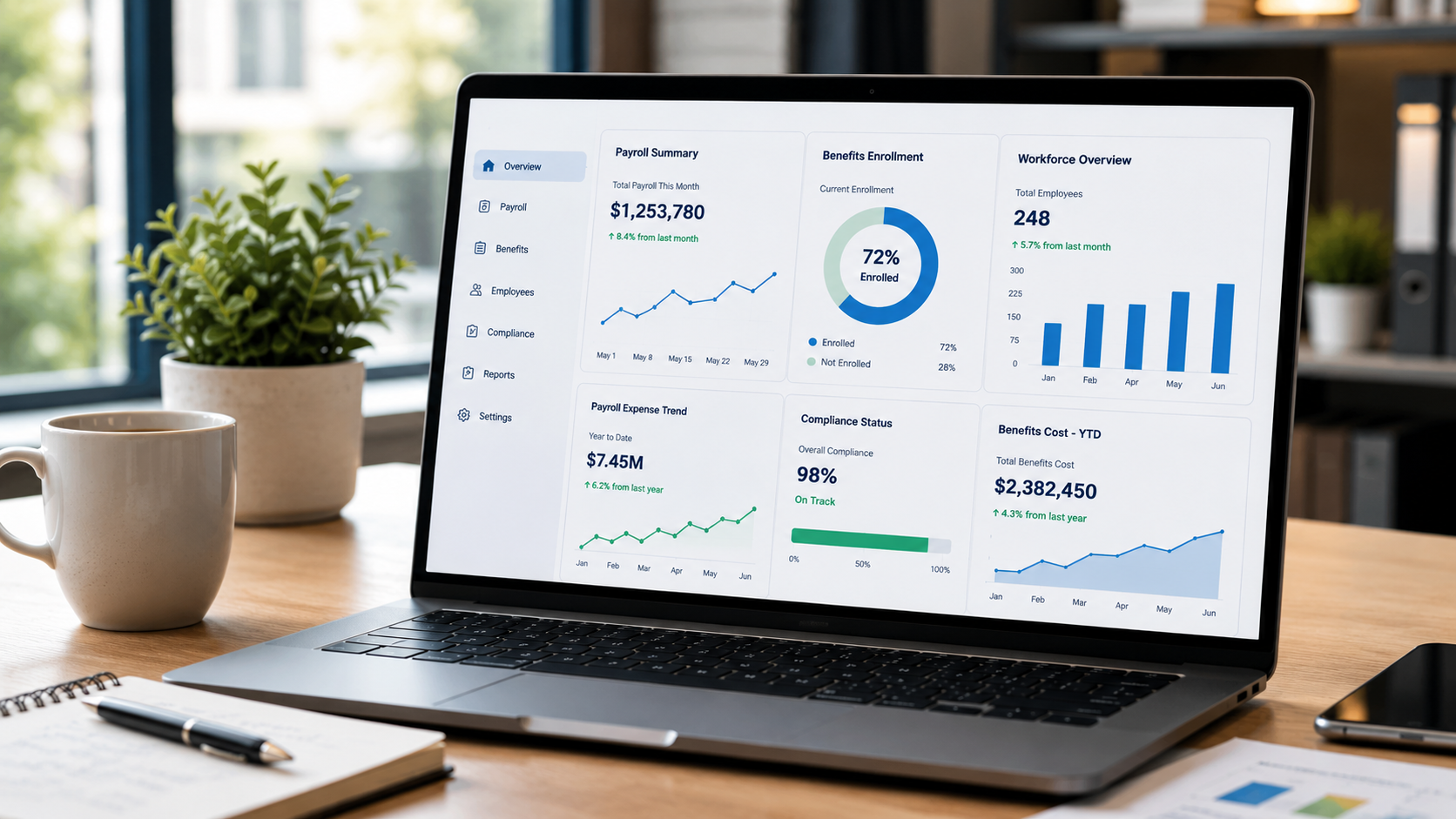
HR outsourcing services help businesses manage core human resource functions through an external HR partner. These services may include payroll processing, benefit administration, compliance support, employee onboarding, employee relations, HR technology, reporting, and workforce administration.
Instead of building a larger internal HR department, businesses can access experienced HR professionals, proven processes, and scalable technology that help reduce administrative burdens and support better decision-making.
Quick Answer
HR outsourcing services help businesses manage payroll, compliance, recruiting, HR technology, and workforce administration through an external HR partner.
Why Businesses Are Outsourcing HR in 2026
HR outsourcing has become more strategic because employers are facing more complex workforce and compliance demands than ever before. Businesses are not only looking for help with paperwork; they are looking for practical support that helps them stay current, organized, and prepared.
Key 2026 considerations include:
- Remote and multi-state workforce management
- Payroll accuracy and tax coordination
- Changing employment-law requirements
- Benefit administration and employee communications
- HR technology, reporting, and employee self-service
- Workforce planning and employee relations
- New benefit-related considerations, including Trump Accounts
One timely example is Trump Accounts. The IRS describes Trump Accounts as a new type of individual retirement account for eligible children, with a pilot program contribution of $1,000 for children born between January 1, 2025, and December 31, 2028, who meet eligibility requirements. The IRS also states that contributions cannot be made before July 4, 2026, and that certain employer contributions may be made subject to applicable limits.
For employers, this creates practical HR questions: How should the benefit be communicated? How should payroll or contribution workflows be handled? How should the business coordinate with its benefits broker, tax advisor, or legal counsel?
An HR outsourcing partner can help employers turn these types of changes into clear internal processes, employee communications, and administrative workflows.
The Three Core HR Outsourcing Models
1. Professional Employer Organization — PEO
A PEO provides a comprehensive HR outsourcing model. Under a co-employment relationship, the PEO takes on certain employer responsibilities while the client business maintains control over daily operations and employee management. PEO services typically include payroll processing, benefit administration, HR management, compliance assistance, and risk management.
Best for: Businesses that want a full-service HR solution with ongoing support for payroll, benefit administration, compliance, risk management, and workforce operations.
2. Administrative Services Organization / Human Resource Outsourcing — ASO/HRO
ASO/HRO services are a flexible option for businesses that want HR support while remaining the employer of record. This model can help with administrative and technology-driven HR functions such as payroll processing, benefit administration, HRIS oversight, compliance assistance, reporting, and employee support.
Best for: Companies that want to maintain more employer control while reducing administrative workload and strengthening HR operations.
3. HR Consulting
HR Consulting provides strategic guidance for businesses that may not need a full outsourcing relationship but still need expert HR support. This can include help with compliance reviews, employee relations, HR policies, organizational changes, leadership support, workforce planning, and other HR challenges.
Best for: Businesses facing growth, restructuring, compliance questions, employee relations issues, or specific HR projects that require experienced guidance.
PEO vs. ASO/HRO vs. HR Consulting
| Feature | PEO | ASO/HRO | HR Consulting |
|---|---|---|---|
| Payroll Management | ✔ Included | ✔ Included | Advisory / Optional |
| Benefits Administration | ✔ Included | ✔ Included | Advisory |
| HR Compliance | ✔ Comprehensive | ✔ Comprehensive | ✔ Strategic Guidance |
| HR Technology | ✔ Included | ✔ Included | Recommendations |
| Risk Management | ✔ Comprehensive | ✔ Guidance & Support | Advisory |
| Employer Relationship | Co-employment | Employer remains the employer of record | Employer remains the employer of record |
| Strategic HR Support | ✔ Ongoing | ✔ Ongoing | ✔ Comprehensive |
| Best For | Businesses seeking a full-service HR solution | Organizations wanting HR administration support while maintaining employer control | Businesses needing expert HR strategy, compliance, and organizational development |
How to Choose the Right HR Outsourcing Partner in 2026
Not every HR outsourcing provider offers the same level of service, technology, or strategic support. Before choosing a partner, evaluate whether they can support the way your business actually operates.
1. Needs and Pain Point Alignment
Choose a provider that understands your business needs, workforce challenges, and HR pain points. The right partner does not have to specialize in one specific industry to provide meaningful support. What matters most is whether they can identify where your team is stretched, what risks need attention, and what processes will help your employees and leadership team work more effectively.
2. HR Technology, Reporting, and Employee Self-Service
Look for integrated HR technology that supports payroll processing, benefit administration, onboarding workflows, document management, time and attendance, compliance tracking, reporting, and employee self-service.
Strong HR technology should make it easier for employers to access data, support employees, reduce manual work, and improve the overall HR experience.
3. Benefit Administration That Complements Broker Relationships
For businesses that work with benefits brokers, HR outsourcing should complement—not compete with—the broker relationship. A strong HR partner can support administrative workflows, employee records, eligibility tracking, payroll coordination, and employee communications while the broker continues to provide plan strategy, carrier guidance, and advisory support.
This distinction is especially important for employers who want better HR and benefit administration without disrupting trusted broker relationships.
4. Compliance Support
Employment regulations continue to evolve, especially for businesses with employees in multiple states. Your HR partner should provide proactive guidance, help maintain accurate records, support policy updates, and assist with HR processes that reduce risk.
Compliance support should not be limited to reacting when something goes wrong. It should help your business stay organized and prepared.
5. 2026 Readiness
Your HR partner should help translate new requirements and workforce trends into practical action. That may include monitoring employment-law updates, reviewing payroll and benefit administration processes, preparing employee communications, and helping leadership evaluate new considerations such as Trump Account contributions.
The Department of Labor has issued guidance stating that Trump Account contribution programs generally will not constitute employee pension benefit plans under Title I of ERISA when certain conditions are met. Employers considering contributions should still review the details carefully with appropriate advisors.
6. Dedicated HR Support
Ask whether your business will have access to a dedicated HR advisor or consultant. A consistent advisor can better understand your goals, employee issues, internal processes, and growth plans.
7. Scalability
Your HR needs will change as your business grows. The right partner should be able to scale support as you add employees, expand into new states, adjust benefit offerings, or need more strategic HR guidance.
Signs It May Be Time to Outsource HR
You may benefit from HR outsourcing services if:
- Payroll is taking too much time
- Benefit administration feels difficult to manage
- Compliance concerns are increasing
- Your team operates in multiple states
- Employees need easier access to HR information
- Your leadership team spends more time on HR tasks than strategy
- You need stronger HR processes but are not ready to build a larger internal HR team
- You want better coordination between HR, payroll, benefit administration, and broker support
Questions to Ask Before Choosing an HR Partner
Before signing an agreement, ask:
- What HR challenges and business pain points can you help us solve?
- Will we have a dedicated HR advisor or consultant?
- How do you monitor and communicate compliance updates?
- What HR technology, reporting, and employee self-service tools are included?
- How do you support payroll processing and benefit administration?
- How do you coordinate with our benefits broker?
- Can your services scale as our workforce grows?
- How would you help us evaluate new 2026 considerations, such as Trump Account contributions?
Why Businesses Choose HR Partners
Since 1998, HR Partners has helped organizations simplify human resources through flexible HR service models, including PEO, ASO/HRO, and HR Consulting. HR Partners began as Lowden and Associates Inc. in Atlanta, Georgia, in May 1998, as a Human Resource Consulting and Payroll Services firm.
Through its service models, HR Partners supports key functions such as payroll processing, benefit administration, compliance assistance, employee relations, reporting, and integrated HR technology. This structure keeps the focus on choosing the right service model first, with administrative and technology support included as part of the overall HR solution.
Whether your business needs a full-service PEO relationship, flexible ASO/HRO support, or strategic HR Consulting, HR Partners helps identify an approach that aligns with your goals, workforce needs, broker relationships, and growth plans.
Frequently Asked Questions
What are HR outsourcing services?
HR outsourcing services allow businesses to outsource payroll, benefits administration, HR compliance, recruiting, and workforce administration to an experienced third-party provider.
What’s the difference between a PEO and an ASO?
A PEO operates under a co-employment relationship and provides broader HR support, while an ASO delivers administrative HR services without becoming a co-employer.
Is HR outsourcing worth it?
For many small and mid-sized businesses, outsourcing HR can reduce administrative burdens, improve compliance, and provide access to HR expertise and technology.
Can HR outsourcing improve compliance?
Yes. Experienced HR providers help businesses navigate changing employment regulations, payroll requirements, workplace policies, and risk management.
Conclusion
Choosing the right HR outsourcing services in 2026 is not only about reducing paperwork. It is about choosing a partner that can help your business respond to new compliance expectations, improve employee support, coordinate benefit administration, and build scalable HR operations.
Whether your organization is evaluating PEO services, ASO/HRO services, or HR Consulting, HR Partners can help you choose the right model and implement practical support that aligns with your goals, your workforce, and your existing broker relationships.
With the right HR partner, your leadership team can spend less time managing administrative complexity and more time building a stronger, more resilient business.
Ready to explore the right HR outsourcing model for your business? Contact HR Partners to start the conversation.
Sources
PEO Services – https://gohrp.com/peo-services/
ASO/HRO Services – https://gohrp.com/aso/
HR Consulting – https://gohrp.com/hr-consulting/
Contact HR Partners – https://gohrp.com/contact/
U.S. Department of Labor – https://www.dol.gov/
Society for Human Resource Management (SHRM) – https://www.shrm.org/
Internal Revenue Service (Employment Taxes) – https://www.irs.gov/businesses/small-businesses-self-employed
Equal Employment Opportunity Commission (EEOC) – https://www.eeoc.gov/