


Geopolitical events may seem distant, but their effects quickly reach the workplace. Market volatility, inflation, and global conflict can influence employee well-being, benefits costs, and business decisions.
Wells Fargo’s lowered S&P 500 forecast highlights a critical shift: economic uncertainty is now a workforce issue—not just a financial one.
For HR leaders, employers, and benefits brokers, the real concern is how instability impacts employee financial security, healthcare affordability, workforce planning, and organizational risk.

Why Market Volatility Matters Beyond Wall Street
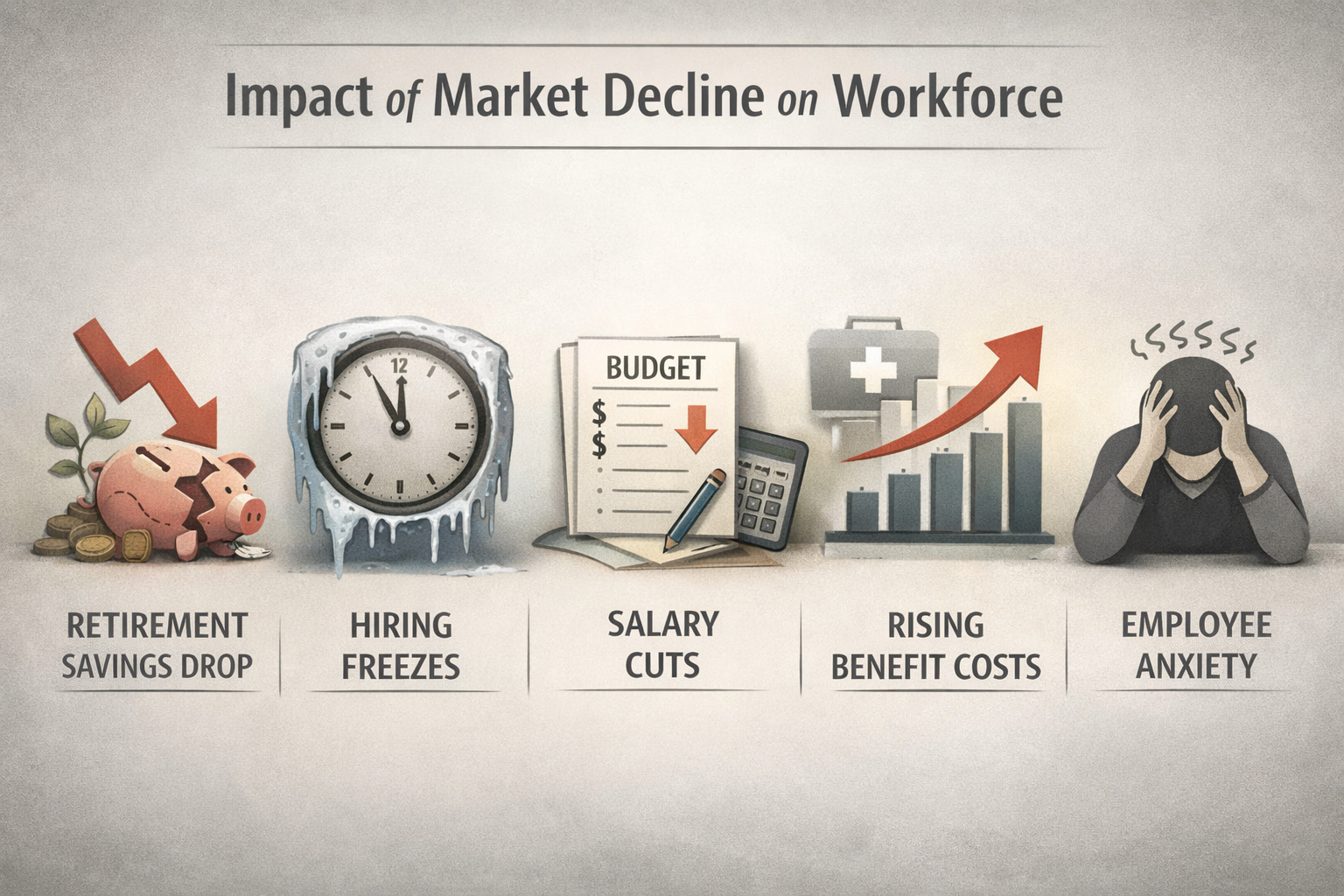
Market downturns don’t just affect investors—they directly influence employer decisions and employee behavior.
A weaker market outlook can impact:
- Retirement plan performance and employee confidence
- Salary increases and hiring budgets
- Employer contributions to benefits programs
- Workforce expansion or restructuring decisions
- Demand for financial wellness programs
When markets become more volatile, employees often delay retirement, increase concerns about savings, and look to employers for more support.
The HR and Benefits Impact of Geopolitical Instability
Global conflicts create economic ripple effects that show up quickly in the workplace.
Common impacts include:
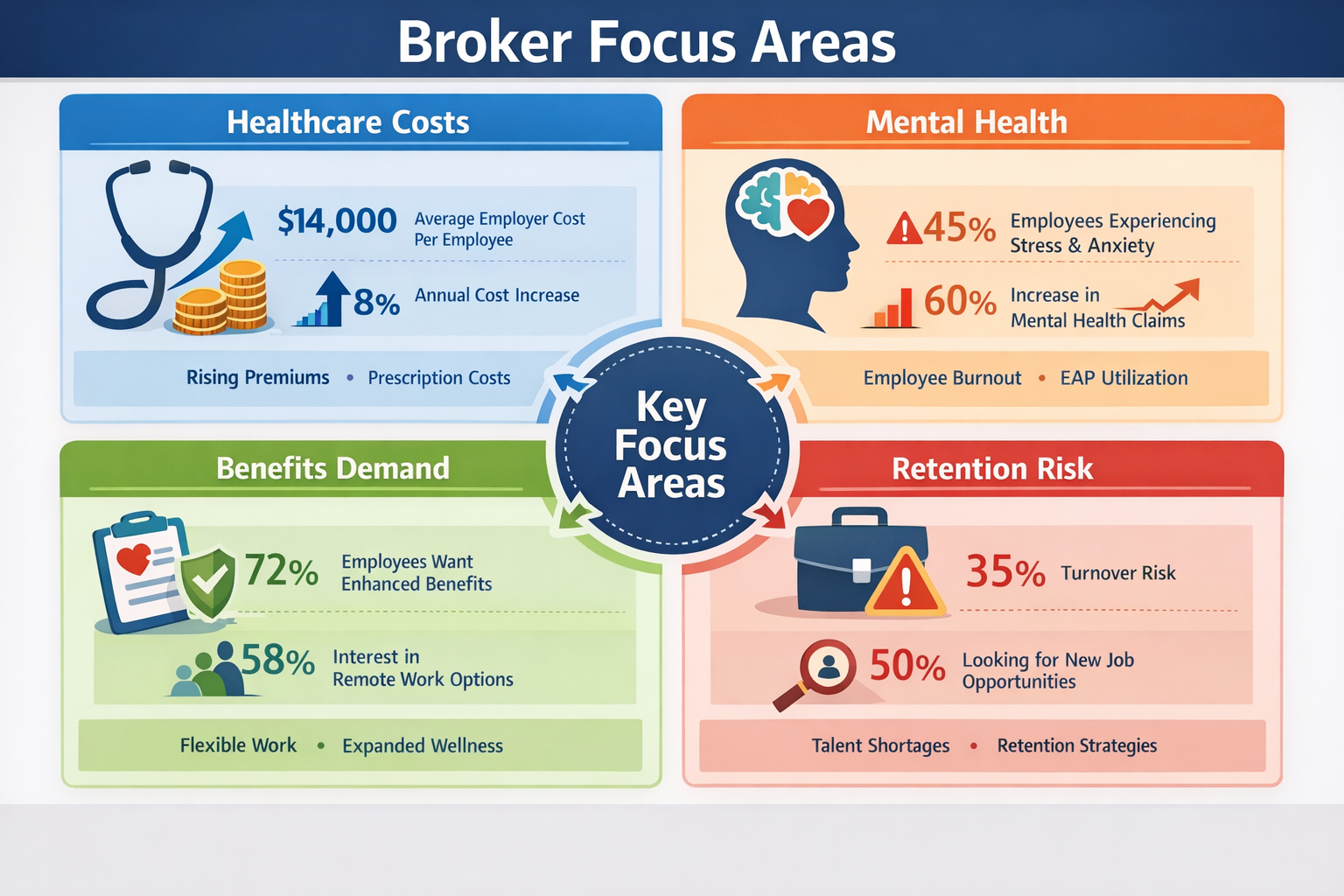
- Increased employee stress and anxiety
- Greater demand for mental health support
- Pressure on compensation and total rewards
- Delayed retirements are affecting workforce planning
- Increased sensitivity to healthcare costs
During uncertain times, employees tend to value stability more than new perks. Clear communication and accessible support become critical.
What Benefits Brokers Should Monitor in 2026
Benefits brokers have an opportunity to shift from transactional support to strategic guidance.
Key areas to monitor:
Workforce risks such as burnout, absenteeism, and retention challenges
Brokers can add value by helping employers connect macroeconomic trends to workforce strategy and plan for multiple economic scenarios.
Rising healthcare and pharmacy costs
Increased demand for voluntary benefits
Growth in mental health and EAP utilization
Retirement plan engagement and education
High-Impact Benefits Strategies During Uncertain Times
Periods of instability highlight which benefits truly support workforce resilience.
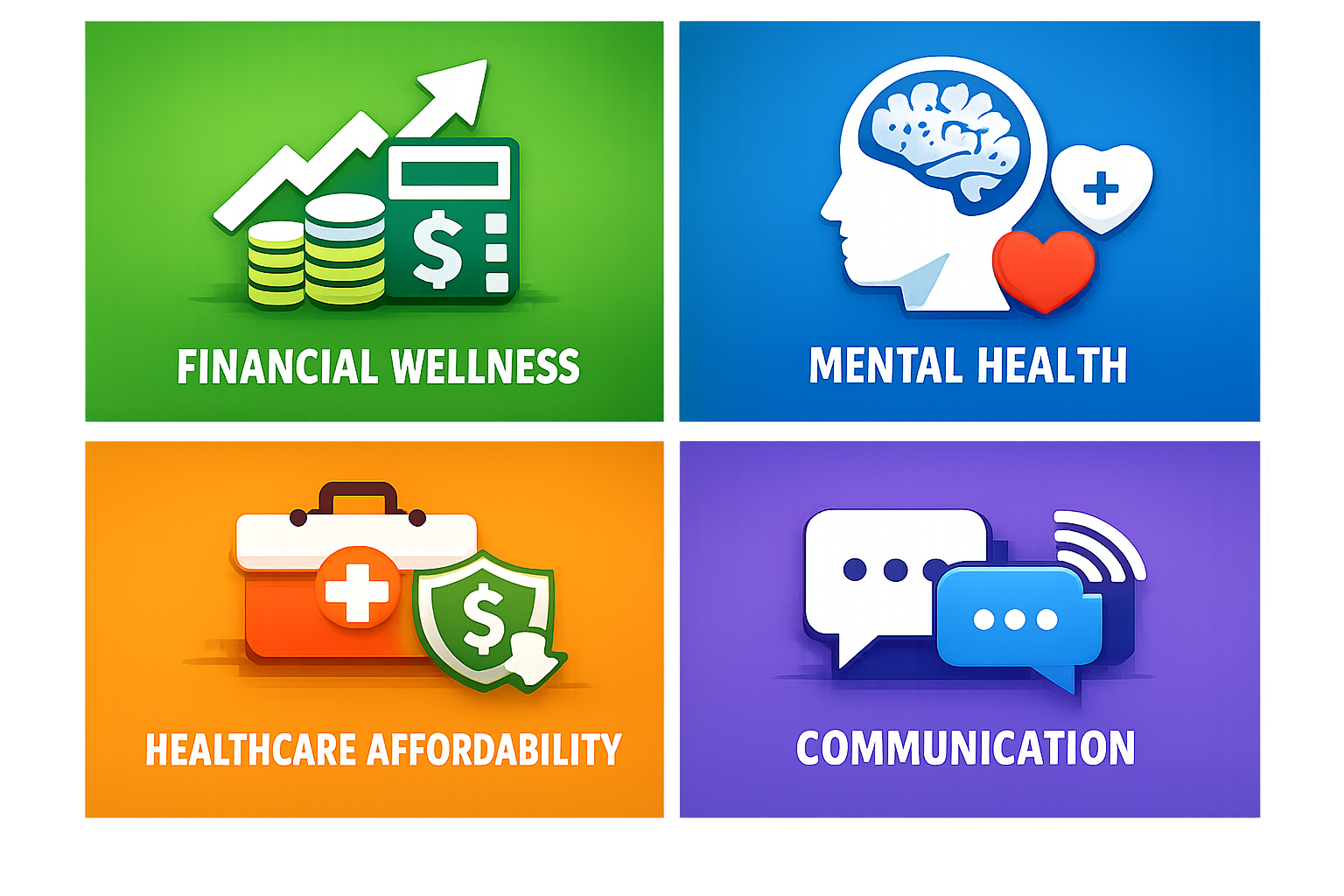
Financial Wellbeing Programs
Mental Health Support
Economic and geopolitical uncertainty can increase stress levels across the workforce. Employers should evaluate Employee Assistance Programs (EAPs), virtual mental health access, manager training, and crisis support resources.
Healthcare Affordability
As household budgets tighten, out-of-pocket healthcare costs become more important. Employers can review copay and deductible structures, promote preventive care, and provide navigation tools for cost-effective care.
Communication and Workforce Flexibility
Transparent and consistent communication builds trust during uncertain times. Employers should provide regular updates, clear access to benefits information, and equip managers with talking points to support employees.
What Employers and Brokers Should Do Next
Organizations that act early are better positioned to manage uncertainty.
For Employers
- Review total rewards strategy for economic volatility
- Assess benefits supporting financial and mental health
- Improve affordability for both employer and employee costs
- Strengthen communication around available resources
- Model workforce scenarios, including hiring slowdowns or delayed retirement
- Train managers to support employees during uncertainty
For Brokers
- Provide market-informed insights beyond renewals
- Position benefits as a workforce risk management tool
- Benchmark strategies against evolving employee expectations
- Recommend practical, high-impact plan improvements
Building Workforce Resilience in a Volatile World
The broader lesson from Wells Fargo’s outlook is clear: volatility impacts more than financial markets—it reshapes workforce strategy.
HR leaders and benefits brokers should focus on financial resilience, employee wellbeing, cost management, and proactive planning. Organizations that adapt early will be better equipped to navigate uncertainty and support their workforce effectively.
FAQ
Why should HR leaders care about stock market forecasts?
Market changes can influence employee financial stress, retirement timing, hiring plans, and benefits budgets.
How does geopolitical conflict impact employee benefits?
It increases demand for mental health support, financial well-being programs, and affordable healthcare while raising employer cost pressures.
What should companies prioritize during economic uncertainty?
Affordable healthcare, mental health access, financial wellness programs, and clear communication.
How can brokers add value during volatility?
By providing strategic guidance, scenario planning, and cost-effective benefits solutions.