2026 HR Calendar for US Businesses: Key Deadlines, Compliance, and Strategic Planning Guide
Most HR compliance penalties occur in the first quarter of the year—yet many organizations still operate without a structured HR calendar.
The 2026 HR calendar is more than a list of deadlines. It’s a strategic framework that helps business leaders stay compliant, ensure payroll accuracy, and align workforce planning with business growth.
For CEOs, founders, and executive teams, HR is no longer just administrative—it directly impacts risk management, cost control, and employee retention.
This guide outlines the most important HR deadlines in 2026, including payroll tax filings, ACA reporting, and open enrollment planning—so your organization can stay ahead and avoid costly mistakes.
Why HR Timing Matters for Business Leaders
For CEOs, founders, and executive teams, HR is no longer an administrative function—it is a strategic driver of business growth and risk management.
Poorly managed HR cycles can lead to:
- IRS penalties and compliance violations
- Payroll inaccuracies and financial discrepancies
- Increased employee turnover and retention challenges

At HR Partners, organizations streamline payroll, compliance, and HR operations through outsourcing—reducing internal workload while improving accuracy and scalability.
Learn more: https://gohrp.com/
What Is an HR Calendar and Why Is It Important?
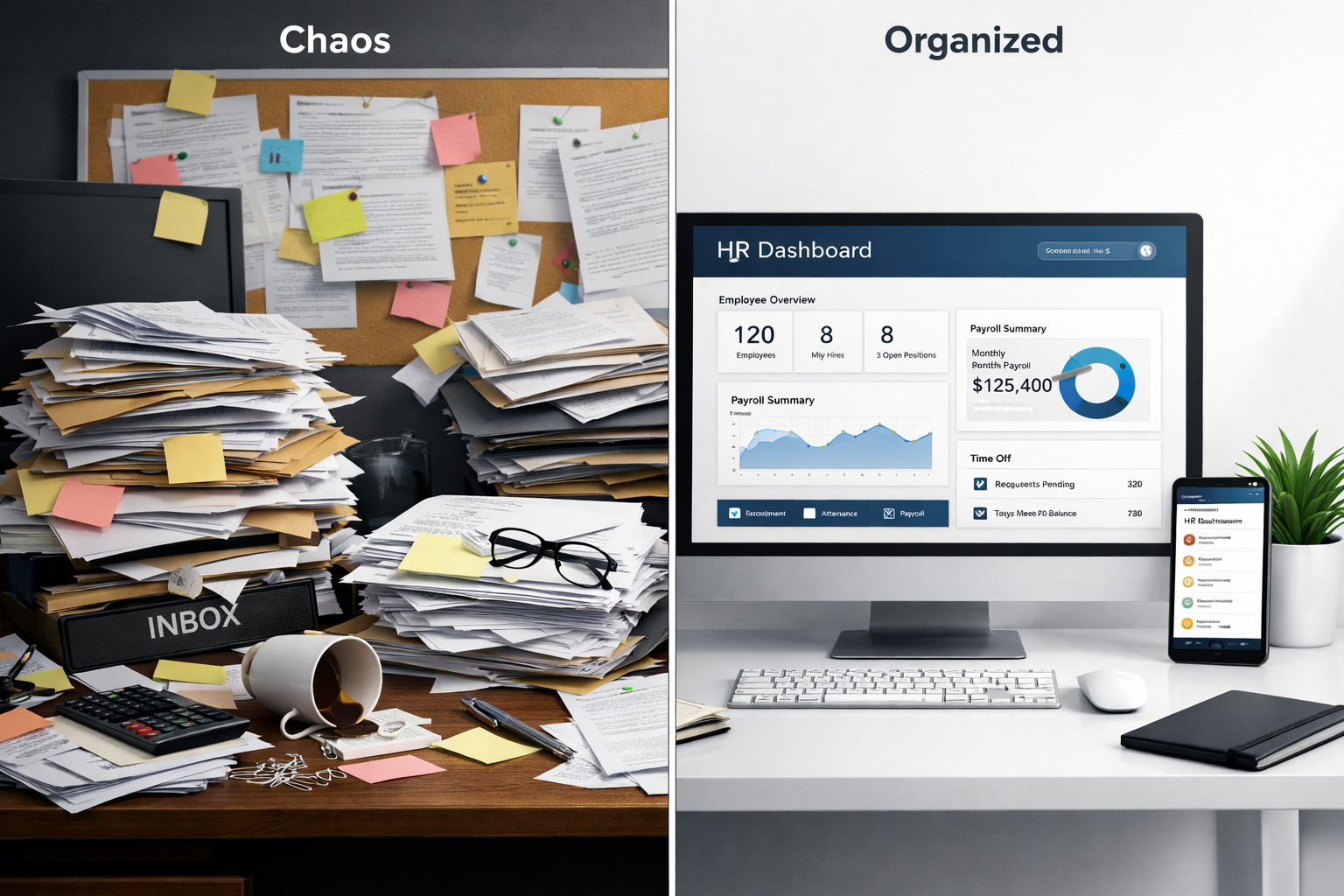
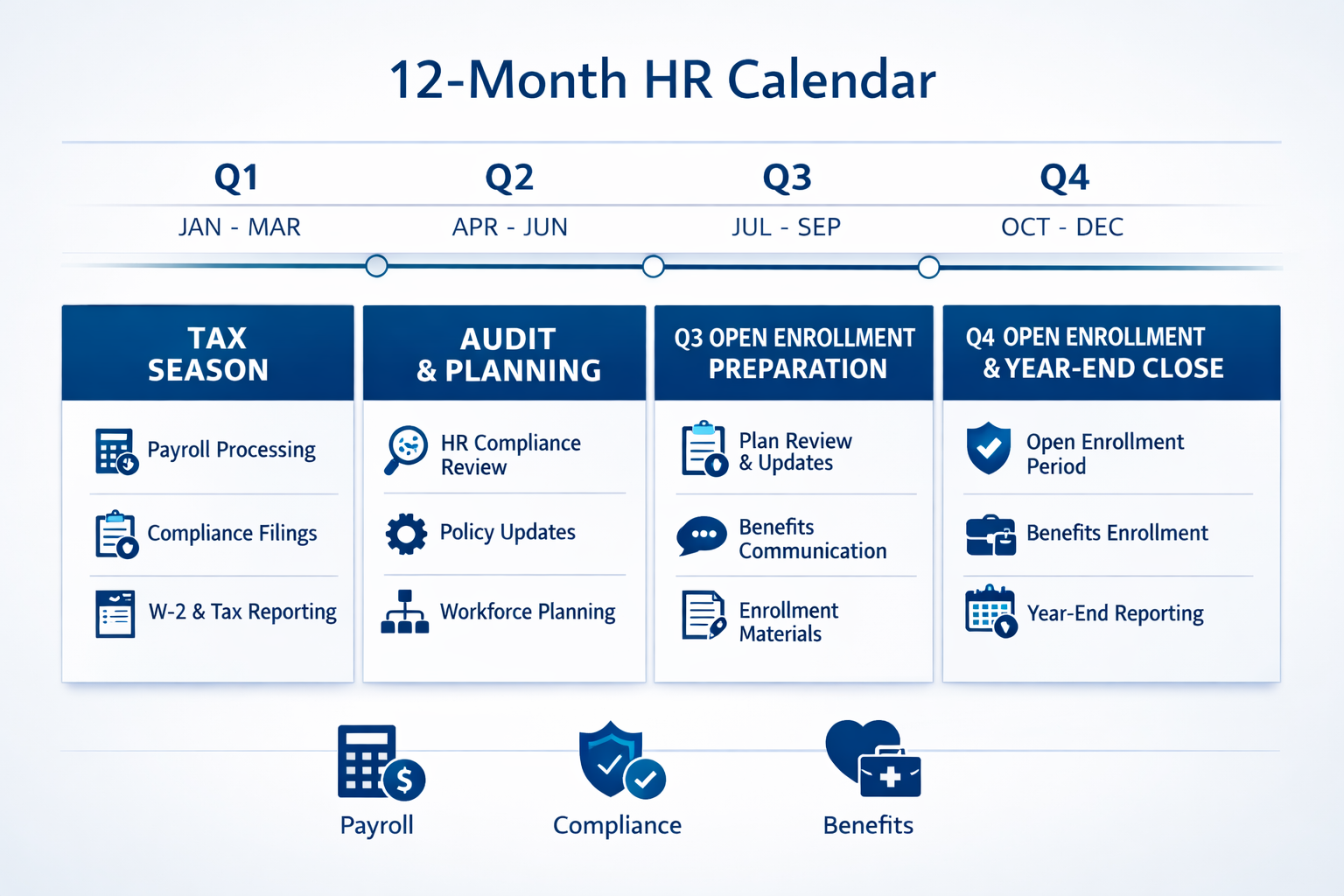
An HR calendar is a structured schedule of compliance deadlines, payroll activities, and workforce planning initiatives that organizations must manage throughout the year to remain compliant and operationally efficient.
It ensures:
- Timely tax filings with the Internal Revenue Service (IRS)
- Compliance with regulations from the Department of Labor (DOL)
- Accurate payroll processing
- Proactive workforce planning
Key HR Deadlines for 2026
The most critical HR deadlines include:
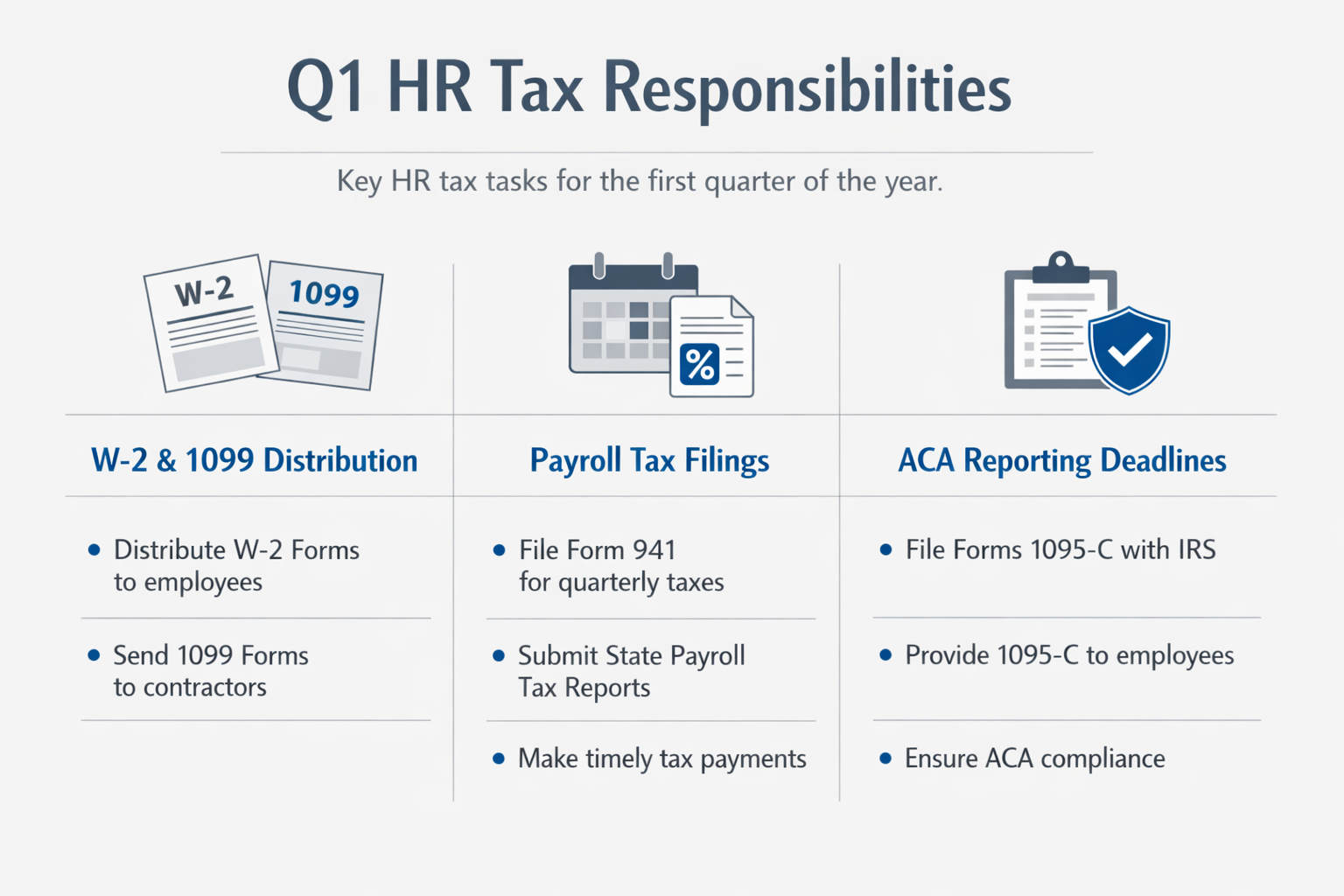
- January 31: W-2 and 1099 distribution
- Q1: Payroll tax filings and ACA reporting
- Q3–Q4: Open enrollment preparation and execution
- Year-end: Payroll reconciliation and compliance reporting
Missing these deadlines can result in penalties, audits, and employee dissatisfaction.
Q1: Tax Season and Compliance (January–March)
Q1 is the most compliance-intensive period of the year and carries the highest financial and regulatory risk.

What Requires Executive Attention
W-2 and 1099 Distribution (January 31)
Employers must meet strict IRS deadlines for accurate employee tax documentation.
Payroll Tax Filings
Payroll systems must align with federal and state filings to avoid penalties and audits.
ACA Reporting
Applicable large employers must complete Affordable Care Act reporting accurately and on time.
For official guidance:
https://www.irs.gov/businesses/small-businesses-self-employed/employment-taxes
Businesses often rely on HR outsourcing solutions to ensure compliance and accuracy:
https://gohrp.com/aso/
For deeper insights:
https://gohrp.com/understanding-and-implementing-payroll-best-practices/
Executive Insight:
Q1 errors can create cascading compliance and financial issues throughout the year—making early accuracy critical.
Q2: HR Audit, Optimization, and Strategic Planning (April–June)
Q2 is the only window to fix inefficiencies before they become costly year-end problems or compliance risks
Key Business Priorities
- Conduct comprehensive HR audits
- Reconcile payroll data and filings
- Improve HR systems and workflows
- Align workforce strategy with business goals
Executive Insight:
Q2 is your opportunity to fix inefficiencies before they become costly problems later in the year.
Q3: Preparing for Open Enrollment (July–September)
Preparation during Q3 directly impacts employee satisfaction, participation rates, and retention.
What Leaders Should Prioritize
- Benefits strategy and cost control
- Data accuracy and system readiness
- Employee communication planning
Organizations that prepare early experience fewer enrollment errors and higher employee engagement.
Improve employee experience:
https://gohrp.com/blog/work-life-balance-strategies-for-supporting-employee-well-being/
Executive Insight:
Poor planning in Q3 leads to confusion, errors, and disengagement during open enrollment.
Q4: Open Enrollment and Year-End Close (October–December)
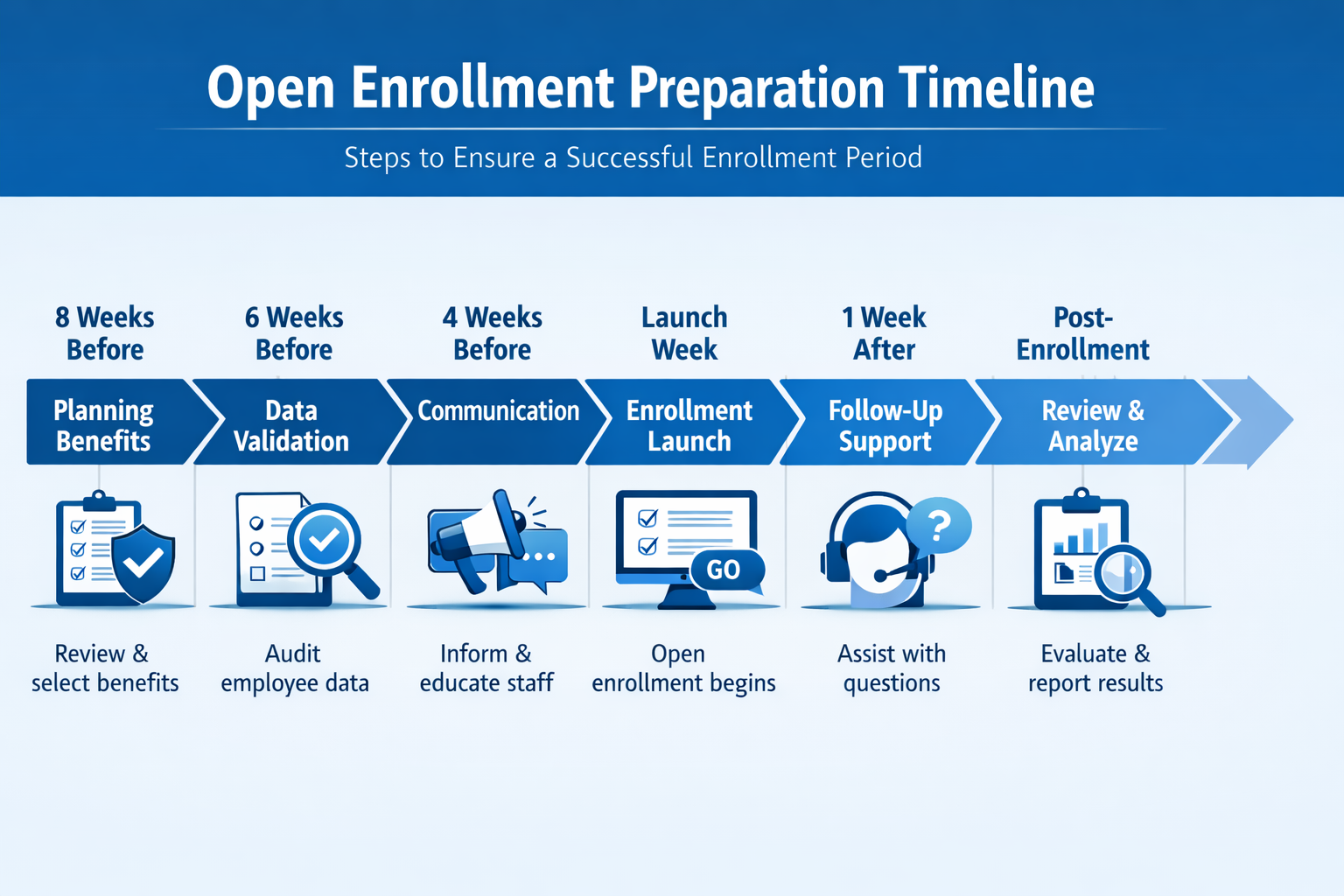
Q4 combines execution, compliance, and forward planning.
Open Enrollment Execution
This is a critical opportunity to improve retention and employee satisfaction.
Focus areas:
- Clear and consistent communication
- Simplified enrollment processes
- Employee education on benefits
Year-End Responsibilities
- Payroll reconciliation
- Compliance documentation
- Planning for the upcoming tax season
For compliance guidance:
https://www.dol.gov/general/topic/health-plans
Executive Insight:
Q4 performance determines how smoothly your organization enters the next fiscal year.
Key HR Trends Business Leaders Should Watch in 2026
Automation and Efficiency
Organizations are adopting HR technology to reduce manual processes and improve accuracy.
Growth of HR Outsourcing
More businesses are outsourcing HR functions to manage compliance complexity and scale efficiently.
Strategic Workforce Planning
HR is increasingly influencing business growth, cost management, and long-term strategy.
Continuous HR Operations
HR is no longer seasonal—it requires consistent, year-round management.
To explore broader trends:
https://gohrp.com/geopolitical-conflict-hr-benefits-workforce-strategy/
Executive HR Checklist for 2026
Q1
- Complete tax filings
- Ensure payroll accuracy
Q2
- Conduct HR audits
- Optimize systems and workflows
Q3
- Prepare benefits strategy
- Finalize open enrollment readiness
Q4
- Execute open enrollment
- Complete year-end reporting
How HR Partners Supports Business Leaders
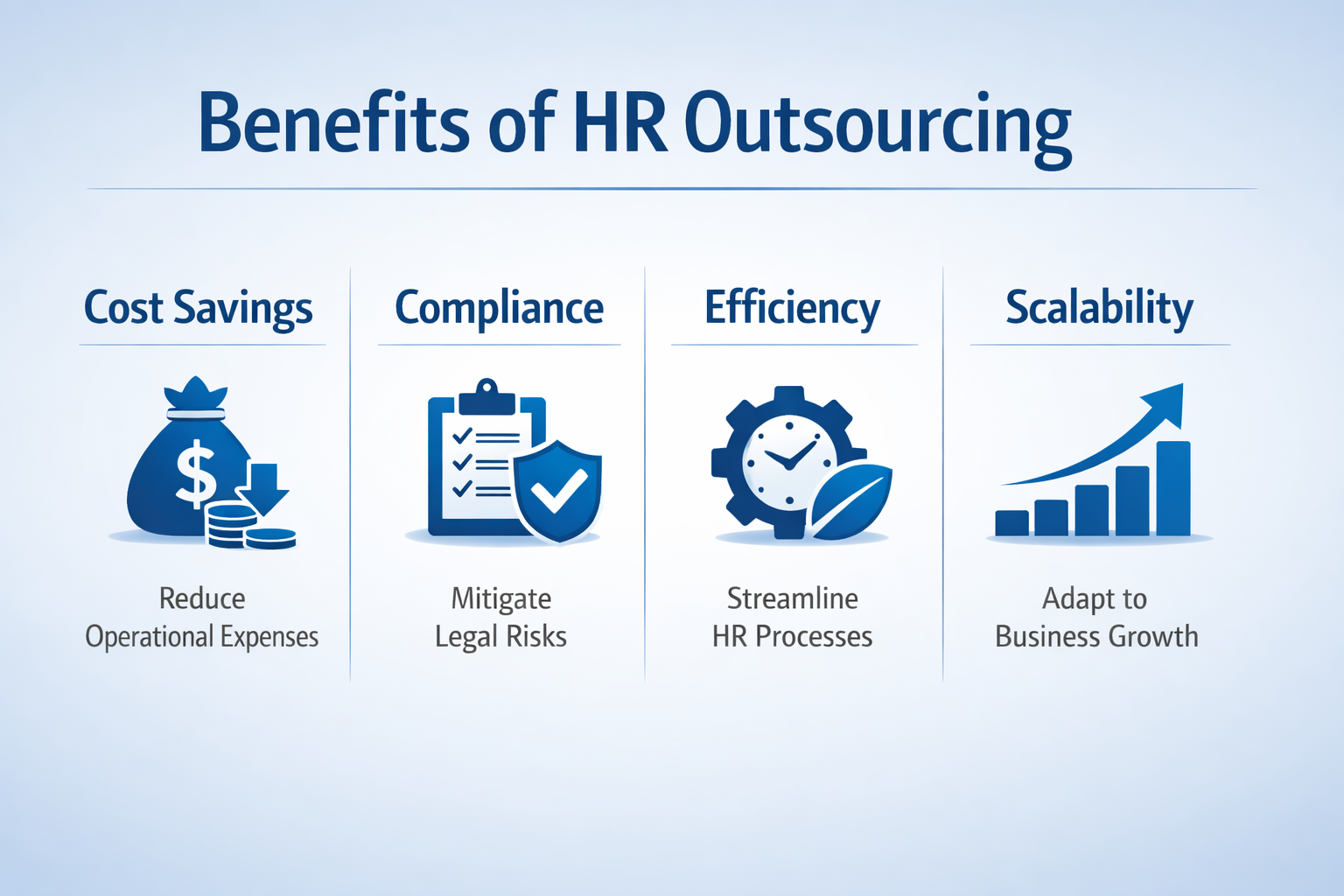
HR Partners helps CEOs and executive teams:
- Stay compliant with federal and state regulations
- Manage payroll and tax processes with accuracy
- Improve benefits administration and employee experience
- Streamline HR operations through scalable outsourcing
If your organization is struggling with compliance, payroll complexity, or workforce planning, HR Partners provides the expertise and systems needed to reduce risk and improve efficiency.
Explore services:
https://gohrp.com/aso/
https://gohrp.com/
Frequently Asked Questions (FAQ)
What is an HR calendar?
An HR calendar is a structured timeline of key compliance deadlines, payroll activities, and workforce planning initiatives that businesses must manage throughout the year. It helps organizations stay compliant, organized, and proactive.
What are the most important HR deadlines in 2026?
The most critical HR deadlines include:
- W-2 and 1099 distribution by January 31
- Payroll tax filings in Q1
- ACA reporting deadlines
- Open enrollment preparation and execution in Q3 and Q4
- Year-end payroll reconciliation
Missing these deadlines can result in penalties and compliance risks.
Why is HR compliance important for businesses?
HR compliance ensures that businesses meet federal and state regulations, avoid costly penalties, and maintain accurate payroll and employee records. It also protects organizations from legal and financial risks.
How can HR outsourcing help with compliance?
HR outsourcing allows businesses to delegate complex tasks like payroll, tax filings, and benefits administration to experts. This reduces internal workload, improves accuracy, and ensures compliance with changing regulations.
Learn more about outsourcing:
https://gohrp.com/aso/
How does HR planning impact employee retention?
Effective HR planning—especially around benefits, payroll accuracy, and communication—directly improves employee experience. Companies that plan ahead see higher engagement, fewer errors, and better retention rates.
Key Takeaways
- HR is a year-round strategic function—not a seasonal task
- Compliance deadlines in Q1 carry the highest risk
- Mid-year optimization improves efficiency and reduces costs
- Open enrollment preparation directly impacts retention
- Proactive HR management strengthens overall business performance
Final Thoughts
HR is no longer a back-office function—it is a critical driver of growth, compliance, and employee retention.
Organizations that proactively manage their HR calendar in 2026 will reduce risk, improve operational efficiency, and build stronger, more resilient teams.