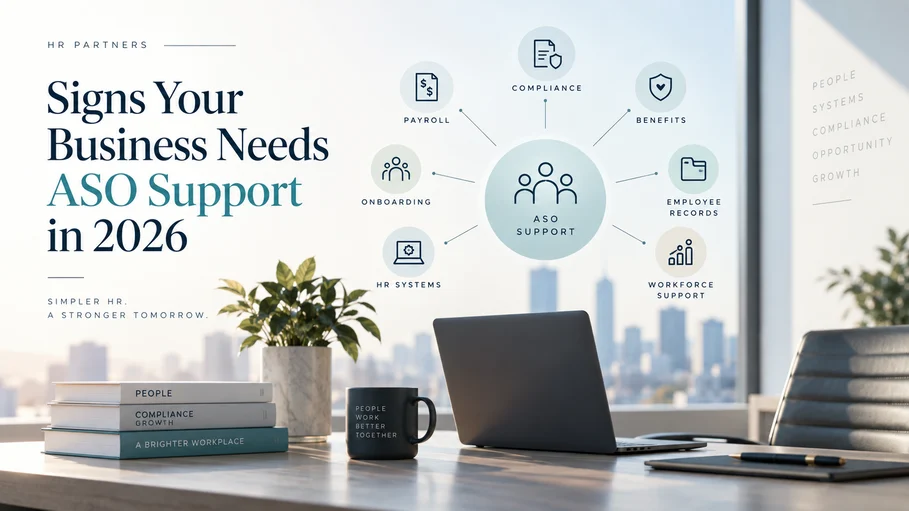
Signs Your Business Needs ASO Support in 2026
Growth changes more than headcount. It changes the amount of HR infrastructure a business needs behind the scenes.
At first, the pressure may be easy to absorb. Payroll takes a little longer. Managers ask more employee questions. Benefits administration requires additional follow-up. Onboarding becomes more manual. Someone spends an afternoon researching which employment rule applies to an employee working in another state.
Eventually, these responsibilities begin competing with the strategic priorities of executives and internal HR teams.
That is often the point when growing companies begin evaluating HR outsourcing services.
For some organizations, an Administrative Services Organization or Human Resources Outsourcing model—commonly referred to as ASO/HRO—can provide additional administrative capacity and HR expertise without requiring the company to replace its internal HR team or give up control of its workforce.
The question is not simply whether your company can continue handling HR internally.
It is whether your current HR structure can continue supporting the business as it grows.
1. Leadership Is Spending Too Much Time on HR Administration
A growing company's leadership team should be focused on customers, strategy, operations, revenue, and growth.
But HR administration has a way of expanding quietly.
A payroll issue reaches finance. A manager needs help navigating an employee situation. A benefits question lands with operations. A new hire needs additional onboarding support. An employee begins working in another state, creating another layer of administrative responsibility.
None of these issues may be significant by itself. The challenge is the cumulative effect.
When CEOs, CFOs, controllers, and operations leaders regularly become part of the unofficial HR department, leadership should ask:
Is this still the best use of our time?
An ASO/HRO model can help shift recurring administrative responsibilities to dedicated HR resources while company leaders retain responsibility for business and workforce decisions.
2. One HR Professional Is Responsible for Too Much
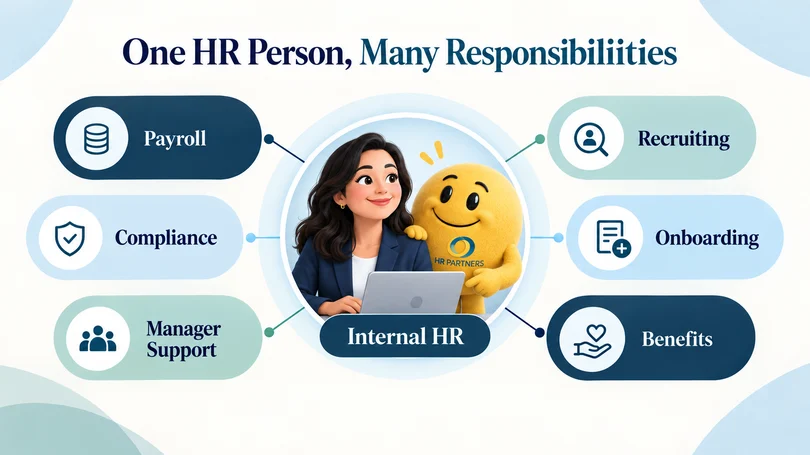
Many growing businesses eventually reach a stage where one HR professional is responsible for payroll, recruiting, benefits, onboarding, employee relations, compliance, HR technology, performance management, training, and manager support.
The problem is not necessarily the person.
The problem may be the operating model around them.
As day-to-day administrative responsibilities increase, strategic work tends to get delayed. Workforce planning, manager development, retention initiatives, process improvement, and employee engagement may all compete with responsibilities that simply cannot wait, such as payroll or urgent employee issues.
This is where HR outsourcing can work differently than many executives assume.
It does not always mean replacing an internal HR function.
An ASO/HRO provider can support selected administrative responsibilities so the internal HR team has greater capacity to focus on the work that requires company context, relationships, and strategic judgment.
HR outsourcing can be reinforcement, not replacement.
3. Your HR Processes Are Becoming Fragmented
Growing businesses rarely design every HR process at once.
They add systems as needs arise.
Payroll may operate in one platform, benefits in another, recruiting somewhere else, employee documents in shared folders, and manager information in spreadsheets. Onboarding may depend on email reminders and manual handoffs.
Each process may still work independently.
The challenge appears between them.
Information gets entered multiple times. Records become inconsistent. Ownership becomes unclear. Employees and managers do not always know where to go. HR spends increasing amounts of time maintaining the process rather than improving it.
This is a form of HR infrastructure debt: processes that worked for a smaller organization but become increasingly difficult to maintain as the business grows.
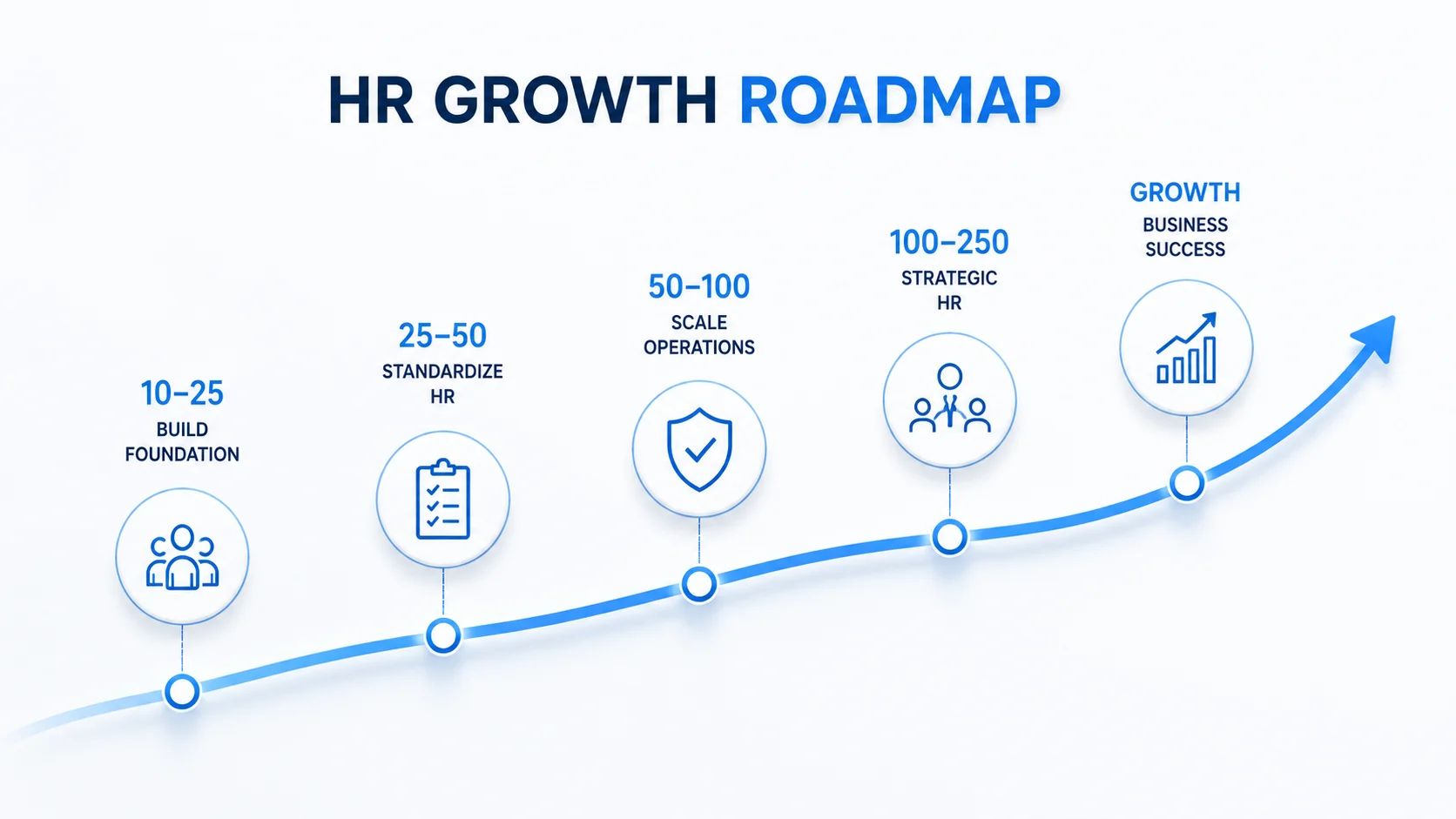
HR Partners' HR Roadmap for Companies With 10–250 Employees explores how HR needs evolve as companies move from foundational administration toward more sophisticated compliance, technology, workforce planning, and leadership support.
ASO/HRO support can help create greater consistency around payroll, HR technology, employee records, benefits administration, and recurring HR processes.
The objective is not simply to add more software.
It is to build a more scalable HR operation.
4. Your Workforce Is Expanding Across States
Expanding into new states creates opportunities for business growth, but it can also introduce additional HR and compliance responsibilities.
Employers with multi-state workforces may need to navigate different requirements related to:
- Payroll registration and taxation
- Wage and hour regulations
- Employee leave policies
- Workers' compensation
- Employment documentation
- Workplace policies and required notices
As your workforce expands across locations, maintaining consistent administrative processes becomes increasingly important.
5. Payroll, Benefits, and Administration Are Becoming Harder to Scale
Growth creates administrative volume.
More employees mean more payroll activity, benefits changes, onboarding, employee records, manager questions, and exceptions.
The important distinction for executives is between a process that can still be completed and one that is truly scalable.
A payroll or onboarding process that depends heavily on one employee remembering every step may work today. It becomes vulnerable when that person is unavailable, the company expands, or administrative volume increases.
The same is true for systems that require repeated manual data entry, spreadsheet maintenance, or frequent corrections.
ASO/HRO support can provide additional structure around payroll administration, benefits administration, HRIS oversight, documentation, and other recurring HR responsibilities.
The goal is not simply to reduce paperwork.
It is to make those processes more repeatable and less dependent on individual workarounds.
6. Managers Need More HR Support
Growth also changes who manages employees.
As founders and executives step away from direct supervision, more responsibility moves to frontline and department managers.
Those managers may need help navigating performance concerns, employee conflicts, attendance issues, accommodations, documentation, promotions, disciplinary conversations, and terminations.
Without consistent HR support, different managers may approach similar situations in completely different ways.
One documents carefully. Another relies on informal conversations. One asks for guidance early. Another waits until the situation has escalated.
Over time, inconsistency becomes an organizational challenge.
7. You Need More HR Capability, but Another Hire May Not Solve Everything
At some point, leadership often asks:
Should we hire another HR employee or outsource part of the function?
There is no universal answer.
An internal hire may be exactly what the organization needs.
But businesses should compare the total HR capability required rather than comparing one person's salary with one outsourcing fee.
According to the U.S. Bureau of Labor Statistics, the median annual wage for human resources managers was $149,280 in May 2025. Salary, however, represents only one part of an HR operating model.
A growing company may also need payroll technology, HRIS support, benefits administration, recruiting resources, employee-relations expertise, compliance resources, manager training, reporting, documentation, and backup coverage.
One additional employee may solve part of that challenge.
If the organization needs capabilities across several different areas, the more useful question becomes:
Which HR model gives our business the capabilities it needs to grow?
That is a more strategic question than simply asking which option costs less.
What Is ASO/HRO?
An Administrative Services Organization, or ASO, provides businesses with selected administrative and human resources services while the client generally remains the employer.
Human Resources Outsourcing, or HRO, is a broader term used for outsourcing selected HR functions.
Depending on the provider and agreement, ASO/HRO services may include support with payroll, benefits administration, HR technology, recruiting, onboarding, compliance processes, employee documentation, and other administrative responsibilities.
The model can be particularly useful for organizations that want additional HR capability without handing over every HR responsibility.
That flexibility makes ASO/HRO attractive to businesses that already have an internal HR professional or team but need additional infrastructure around them.
Internal HR and Outsourced HR: It Doesn't Have to Be an Either-Or Choice
One of the biggest misconceptions about HR outsourcing is that a company must choose between having an internal HR department and outsourcing HR.
Many growing businesses use both. An internal HR leader can continue owning responsibilities where deep organizational knowledge matters most, including culture, employee relationships, workforce planning, leadership development, and talent strategy.
An ASO/HRO provider can support recurring administrative and specialized responsibilities such as payroll, benefits administration, HR technology, documentation, and compliance processes. This creates a hybrid HR model. Internal HR focuses more heavily on the people and strategy of the business. External HR resources help support the infrastructure behind it. The result does not necessarily mean less internal HR.
It can mean more strategic internal HR.
ASO vs. PEO: What Is the Difference?
ASO/HRO and Professional Employer Organization, or PEO, services can both help businesses manage HR responsibilities, but the structures are different.
With an ASO/HRO model, the client generally remains the employer while outsourcing selected administrative or HR functions.
With a PEO, the business enters a co-employment relationship in which the PEO takes responsibility for selected employer-related functions while the client continues managing its employees and day-to-day operations. Neither structure is automatically better.
The right choice depends on factors such as the organization's existing HR resources, administrative workload, benefits strategy, workforce complexity, growth plans, and desired level of control. For some businesses, ASO/HRO provides the flexibility they want. For others, a PEO may provide a broader level of support. Others may only need targeted HR consulting.
The objective is to choose the operating model that fits the organization rather than forcing the organization into a predetermined model.
Is HR Outsourcing Cheaper Than Hiring Internally?
HR outsourcing may be more cost-effective for some organizations, but price alone should not determine the decision.
Internal HR professionals provide valuable company knowledge, accessibility, and employee relationships. An ASO/HRO model can provide additional administrative capacity, HR technology, specialized resources, and support across multiple functions. When evaluating the options, businesses should consider the total cost and capabilities required to maintain effective HR operations.
This includes payroll systems, HR technology, benefits administration, employee documentation, compliance resources, reporting, training, and management time. For businesses that need support across several administrative functions, outsourcing selected responsibilities may offer a more scalable alternative to expanding internal headcount.
The best decision depends on organizational needs, operational complexity, available resources, and long-term growth goals.
What HR Functions Should a Growing Business Outsource?
There is no universal answer. Companies should usually begin by identifying the HR responsibilities that consume significant time, involve repeatable administrative work, create operational risk, or require expertise the current team does not have. For one company, that may be payroll. For another, it may be benefits administration.
Another organization may need help with HR technology, compliance processes, onboarding, documentation, recruiting, or manager support. Strategic responsibilities such as culture, leadership, workforce planning, and major people decisions may remain primarily internal. The best outsourcing model should fit around the company's existing strengths rather than replacing them unnecessarily.
How Do You Know If Your Business Is Ready for ASO Support?
There is no single employee count that determines when a business should outsource HR.
Two companies with 50 employees can have completely different HR needs.
One may operate in a single location with relatively straightforward payroll and HR processes.
The other may employ people across several states, offer multiple benefit programs, hire rapidly, and have managers regularly requesting HR guidance.
Complexity matters as much as headcount.
It may be time to evaluate ASO/HRO support when leadership spends increasing time on HR administration, internal HR capacity is stretched, systems are fragmented, compliance responsibilities are expanding, managers need more guidance, or strategic HR priorities are repeatedly delayed by administrative work.
The presence of one challenge does not automatically mean HR outsourcing is necessary.
But when several begin happening at the same time, it may be worth reassessing whether the current HR structure is still supporting the business effectively.
HR Should Scale With Your Business
The HR model that works for 20 employees may not provide the same support at 50.
Processes that work at 50 employees may become more difficult to manage at 100. As businesses approach 250 employees, they may need additional administrative resources, integrated technology, and more structured HR workflows.
That does not mean something has gone wrong. It means the organization has evolved, and its HR infrastructure needs to evolve with it. The goal of HR outsourcing is not simply to remove responsibilities from someone's desk. It is to create a structure where the right people can focus on the right work.
Leadership can concentrate on business growth. Managers can focus on their teams. Internal HR professionals can dedicate more time to employee relationships, retention, culture, and workforce strategy. Meanwhile, recurring administrative responsibilities can be supported through scalable processes and experienced HR resources.
Sometimes growth does not require replacing your HR department. It requires giving your HR department a better support system.
How HR Partners Can Help
HR Partners supports growing businesses through ASO/HRO, PEO, and HR Consulting solutions.
The right solution depends on the organization's workforce, existing HR resources, administrative needs, growth plans, and desired level of support.
For some companies, the answer may be outsourcing selected administrative functions.
Others may need support surrounding an existing HR team.
Some businesses may benefit from a broader PEO relationship, while others primarily need targeted HR consulting and expertise.
The goal should never be to add more HR simply for the sake of adding HR.
The goal is to build an HR operating model capable of supporting where the business is going next.
Stop Doing HR Alone
If HR administration, workforce complexity, compliance responsibilities, or manager needs are beginning to stretch your current resources, it may be time to look at your HR structure differently.
HR Partners can help you evaluate whether ASO/HRO, PEO, HR Consulting, or a combination of support is the right fit for your organization.
Talk with HR Partners about building an HR model designed to support your next stage of growth.
Frequently Asked Questions
What are HR outsourcing services?
HR outsourcing services allow businesses to use an external provider for selected human resources functions. Depending on the arrangement, services may include payroll, benefits administration, recruiting, onboarding, HR technology, employee documentation, compliance support, and other administrative HR responsibilities.
What is an ASO?
An Administrative Services Organization provides selected HR and administrative services while the client company generally remains the employer. An ASO can support responsibilities such as payroll, benefits administration, HR technology, compliance processes, recruiting, and employee administration.
When should a company outsource HR?
A company may want to evaluate HR outsourcing when HR administration is consuming excessive leadership time, its internal HR team is stretched, compliance responsibilities are becoming more complex, systems are fragmented, or business growth requires expertise and capacity the existing team does not have.
Can you outsource HR if you already have an HR department?
Yes. HR outsourcing can complement an internal HR department. An ASO/HRO provider can support administrative responsibilities while the internal HR team concentrates on areas such as culture, employee relationships, workforce planning, retention, and leadership development.
What is the difference between ASO and PEO?
An ASO generally provides outsourced HR services while the client remains the employer. A PEO operates through a co-employment relationship in which the PEO assumes selected employer-related responsibilities while the client continues managing its workforce and business operations.
Is HR outsourcing cheaper than hiring internally?
It can be, but cost should not be evaluated through salary alone. Businesses should compare the total capabilities they need, including payroll systems, HR technology, benefits administration, compliance expertise, recruiting resources, employee-relations support, training, and management time.
What HR functions can a business outsource?
Depending on the provider, businesses may outsource payroll, benefits administration, recruiting, onboarding, HR technology, employee documentation, compliance processes, and other recurring HR administrative functions.
Does outsourcing HR mean losing control of your employees?
Not necessarily. Models such as ASO/HRO allow companies to outsource selected HR responsibilities while maintaining control over core business decisions, culture, hiring, employee management, and workforce strategy.
Resources
-
U.S. Bureau of Labor Statistics — Human Resources Managers
Current employment and wage information for HR management roles. -
U.S. Department of Labor — Major Laws Administered and Enforced by the Department of Labor
Overview of major federal workplace laws and employer responsibilities. -
U.S. Department of Labor — State Minimum Wage Laws
Current state-by-state minimum wage information. -
U.S. Equal Employment Opportunity Commission — Small Business Resource Center
Federal employment discrimination and employer-compliance resources for small businesses. -
Internal Revenue Service — Employment Taxes
Federal guidance on employer payroll-tax withholding, depositing, and reporting responsibilities.